Seen From Across the Street: The Middle-Distance View America's Facades Forgot
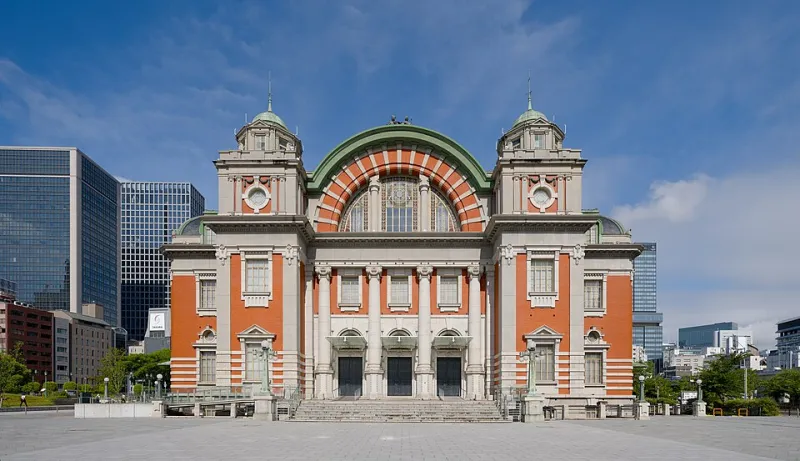
Photo: Daniel Lu (User:dllu), CC BY-SA 4.0, via Wikimedia Commons
Every American building is designed for two audiences and almost no one else. The first audience is the pedestrian at the threshold, greeted by canopy, glass, and a carefully detailed entry sequence. The second is the rendering camera, hovering sixty feet above the parking structure, where the roofline reads as a clean composition. Between those two viewpoints lies the view that most people actually live with: the oblique, middle-distance look from the neighboring office tower, the across-the-street brownstone, the coffee shop on the opposite corner. It is the elevation nobody draws, and it shows.
The Blind Spot in the Drawing Set
Architectural presentation drawings are organized around the hero shot. The front elevation gets the detail; the aerial gets the massing study. What falls between—typically the side and rear elevations viewed from fifteen to a hundred feet at an angle—is handled by default: a party wall, a service face, a plane of precast with a strip of ribbon glass if the budget allows.
Yet consider how a typical office worker in Chicago or Denver actually encounters the buildings around them. From a desk on the ninth floor, the neighboring structure presents its flank for eight hours a day. From a residential street, the rear elevation of the commercial block next door is the neighborhood's de facto front porch backdrop. These are not incidental views. They are the primary visual relationship most people have with most buildings, and they are rarely the subject of deliberate design.
The consequences are visible in every American downtown: the blank party wall facing a parking lot, the loading dock dressed in the same panel as the lobby, the rear facade that reads as a shrug at city scale.
What the Successful Exceptions Do
The buildings that hold up at the middle distance tend to share a few habits, none of them expensive.
First, they articulate the long wall. A two-hundred-foot facade treated as a single plane fails at every range, but especially at the middle distance, where the eye searches for rhythm. The buildings people admire from across the street—think of the warehouse conversions in Portland's Pearl District or the masonry lofts of Detroit's Cass Corridor—break their flanks into bays, shifts, and material changes that give the eye a cadence.
Second, they light for the neighbor, not the photographer. Facade lighting designed for the render washes the wall flatly; lighting designed for the across-the-street view grazes texture, creates depth, and turns the building into a quiet presence after dark rather than a billboard.
Third, they treat the upper floors as a public obligation. The tenth story of a building in a dense district is visible from hundreds of windows. Rooftop mechanical screens, parapet profiles, and penthouse massing deserve the same scrutiny as the ground-floor storefront, because that is where the neighbor's eye actually lands.
Practical Reforms for the Studio and the Code
Firms can institutionalize the middle-distance view without waiting for clients to ask. A useful exercise: before design development, photograph the site from every vantage point a neighbor would occupy—opposite rooftops, adjacent offices, the far curb—and pin those images to the wall. Design to those frames, not just the eye-level render.
Municipalities, meanwhile, have tools at hand. Some cities have begun imposing blank-wall penalties on facades facing residential zones, requiring a minimum percentage of articulation or glazing above the ground floor. Others mandate mid-block breaks in long frontages. These codes are blunt instruments, but they acknowledge a truth the profession has been slow to own: a building's flank is not private property for the owner's neglect. It is the public realm of everyone who looks at it.
There is also a commercial argument. Space in buildings with considered middle-distance facades leases more readily to the neighbors who can see them. A well-detailed flank facing an office tower is, in effect, advertising to that tower's tenants every working day. The blank wall is advertising too—of a different kind.
Designing for the Eye You Cannot See
The deepest test of a building's civic character is not how it performs on opening day or in the marketing brochure. It is how it reads to the person who never enters it, who sees it daily from a window across the way, in rain, in February, at dusk. That person is the majority of a building's audience, and for too long the profession has designed as though they did not exist.
The fix is not ornament or expense. It is attention—paid early, at the scale where most of the looking happens. Draw the fifth elevation. It is the one the city will actually see.