The Vertical Lost Art: How Stairs Became Architecture's Most Underrated Cultural Instrument

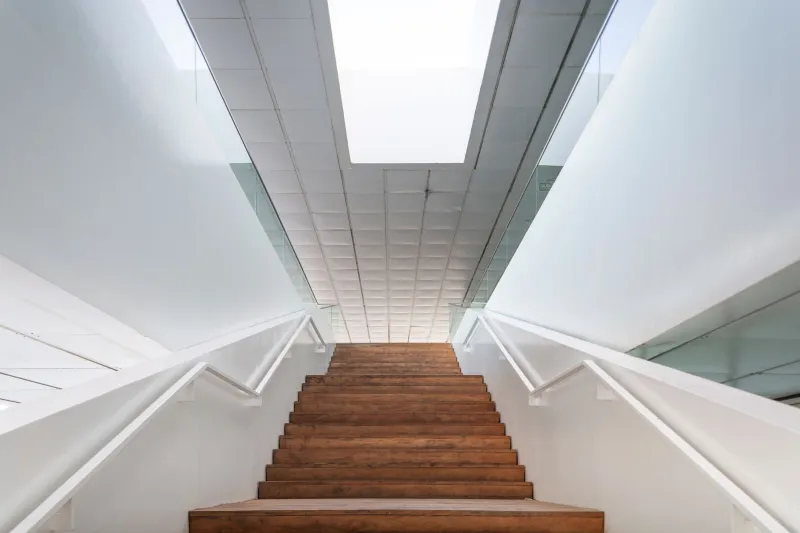
Photo by Photo by LYCS Architecture on Unsplash on Unsplash
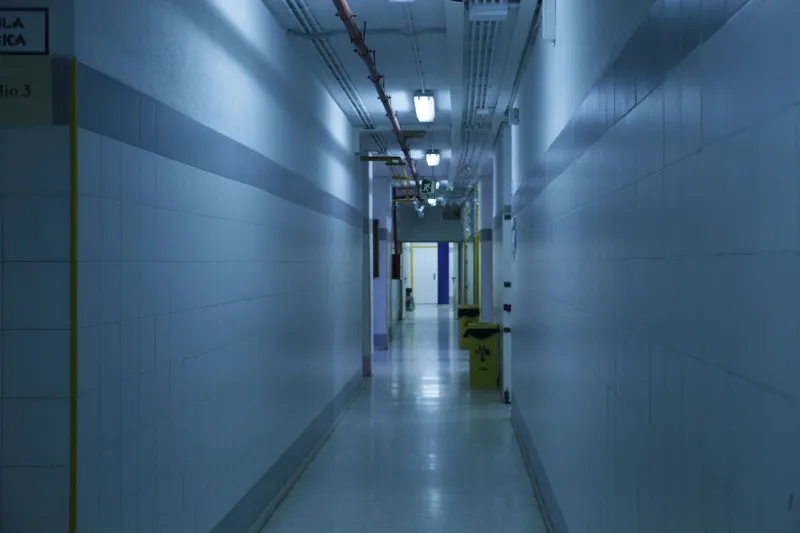
There is a moment in nearly every commercial building tour in America when the conversation turns to square footage. The leasing plan comes out. The core is pointed at. And then, almost without exception, someone gestures toward a gray concrete shaft in the corner and says the words that have quietly shaped American workplaces for seventy years: "And that's the stairwell."
Not a destination. Not a feature. An egress requirement with a door at the bottom.
We believe this casual dismissal represents one of the most consequential design failures of the modern era—not because stairs are glamorous, but because of everything we surrendered when we stopped treating vertical movement as an experience worth designing.
The Elevator Won, and We All Paid
The history here is not subtle. When Elisha Otis demonstrated his safety brake at the 1854 New York World's Fair, he didn't just make tall buildings possible—he made the stairwell optional. Over the following century, American architecture reorganized itself around that option. Elevator lobbies became the true front doors of commerce. Stairs, once grand processional elements in the Beaux-Art tradition—think of the sweeping marble flights of Grand Central Terminal or the Chicago Cultural Center—were exiled to windowless shafts lined with cinder block and painted the color of resignation.
The consequences were predictable. Sedentary behavior became the default of professional life. The serendipitous encounter—so beloved in theory by every executive who champions "collaboration"—was engineered out of the vertical plane entirely. You meet no one in an elevator, and certainly no one lingers there. The stairwell, meanwhile, became a place people passed through only under duress, or when the elevator was being serviced.
Then came the pandemic, and something interesting happened. Buildings that had invested in inviting, daylight-filled vertical circulation discovered their stairs were suddenly an asset: fresh air, physical distance, and exercise in a single gesture. Buildings that hadn't were left with what they had always had—a concrete chute nobody wanted to enter.
The Evidence Isn't Soft
The health literature on stair use is unusually robust for something so unfashionable. Studies published in American public health journals have repeatedly shown that visible, appealing staircases—daylit, finished, positioned along primary paths of travel—can increase stair use by factors of two or more, while concealed stairs behind heavy doors see usage collapse. The Centers for Disease Control has spent years promoting stair-use initiatives in workplaces, and the physical findings are consistent: modest daily climbing measurably improves cardiovascular markers.
But the business case extends beyond wellness. In office environments, the staircase is one of the few remaining venues for unscripted interaction. A colleague ascending three flights is a captive audience for a five-minute conversation that no calendar invite would ever produce. Firms that relocate into buildings with prominent, generous stairs report—consistently, if anecdotally—that interdepartmental contact rises. The staircase performs the same social function as the water cooler, except it distributes the interaction across the entire vertical section of the building.
The Buildings Getting It Right
The encouraging news is that a quiet correction is underway, and it is not confined to boutique projects.
In Manhattan, several recent workplace conversions of prewar walkups and loft buildings have leaned into their vertical bones rather than fighting them—restoring steel stairs as social spines, dressing them in oak and steel, and positioning them in double-height volumes where they can be seen from the street. What was once a tenement liability becomes the building's signature.
On the West Coast, the pattern is even more pronounced. California technology campuses have made the daylight-flooded staircase a near-universal gesture: wide flights that double as amphitheater seating, landings sized for impromptu meetings, stairs threaded through atria so that a person climbing from the second floor to the fourth is visible to half the office. The stair is no longer circulation. It is stage, gymnasium, and town square at once.
Even mainstream commercial development is catching on. The most competitive Class-A office products now market their "communicating stairs" in leasing brochures the way they once advertised lobby marble. Tenants have learned to ask.
The Objection, Answered
The developer's objection is honest: stairs consume prime floor area, and floor area is rentable. Every square foot given to a gracious stair is a square foot that generates no lease revenue.
This accounting is real but incomplete. A well-designed stair of modest footprint—often achievable within or adjacent to the required egress core—can be delivered at marginal cost. Against that cost, weigh the leasing narrative, the retention value of a healthier workforce, the reduced elevator demand in mid-rise buildings (which can shrink the elevator core itself), and the documented productivity of environments that encourage movement. The stair is not a subsidy. It is one of the cheapest cultural instruments a building can contain.
A Modest Proposal
Our position is simple, and we offer it to clients without apology: no one should ever have to apologize for taking the stairs, and no building should make them regret it.
Design the stair as you would design a lobby—with light, finish, and intention. Place it where people can see it. Make it the path of least resistance, not the path of last resort. The elevator will remain, as it should, for the eighth-floor delivery, the aging tenant, the tired Friday. But the daily movement of a building's life should, wherever the building allows, travel on two feet through a space worth moving through.
The most important design decision in your building may well be the one nobody wants to take. Our job is to make them want to.